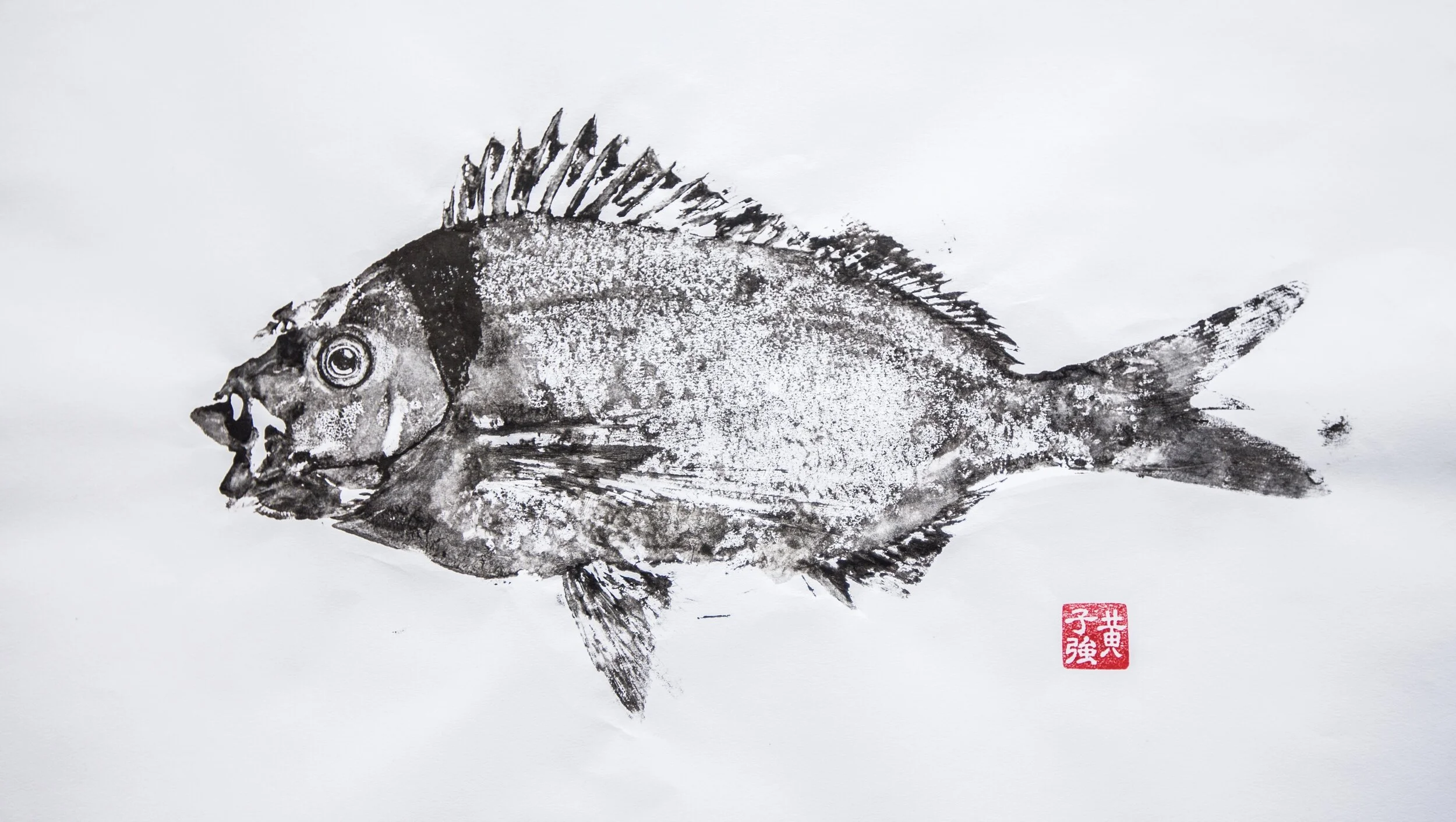
Gyotaku
My father was an angler. He frequented the ponds and rivers near us and, on occasion, went night, ice and sometimes even deep-sea fishing. Few foods are comparable to the taste of fresh and smoked fish, especially eel. Unfortunately, they are a pain in the ass to catch. You sit still the entire night, eat canned ravioli and return home empty-handed if unlucky. I gave it a fair chance back then, but I was way too impatient.
My father commissioned two of his largest catches to be preserved — their heads, to be exact. We received them after his death. I was sad to unpack them without him, but young me thought they looked cool. That's how I ended up with the heads of a pike and an over-two-meter-long catfish in my bedroom. Recently, the older me stumbled across a much more beautiful method to preserve fish.
Gyotaku (魚拓; from gyo "fish" + taku "stone impression") is the traditional Japanese method of printing fish, a practice which dates back to the mid-1800s. This form of nature printing, where ink is applied to a fish which is then pressed onto paper, was used by fishermen to record their catches, but has also become an art form of its own.
The gyotaku method of printmaking uses fish, sea creatures, or similar subjects as its "printing plates". Prints are made using sumi ink and washi paper. It is rumored that samurai would settle fishing competitions using gyotaku prints. This original form of gyotaku, as a recording method for fishermen, is still utilized today, and can be seen hanging in tackle shops in Japan.